What if you could build a world-class LLM on your home computer using model merging without spending a single dollar on GPU training? The traditional path to creating a custom AI model is famously hostile, demanding massive server farms and astronomical electricity bills. This approach, known widely as model merging, has quietly democratized AI development by letting developers stitch existing models together in minutes.
For more on this topic, you might also want to check out Mixture of Experts: 5 Ultimate Secrets of Modern AI in 2025 and Powerful AI Agents: 5 Ways They Use Reflexion in 2024 and Self Rewarding Language Models: 5 Secrets of Autonomous AI and Powerful AI Agents: 5 Ways They Use Long-Term Memory in 2024 and Easy Guide: 7 Ways AI Agents Use Tool-Use in 2024.
The open-source community is currently using this technique to dominate public benchmarks. If you look at the Hugging Face Open LLM Leaderboard, you will notice that many of the top-performing models are not trained from scratch by multi-billion-dollar corporations. They are clever combinations of existing weights, fused together by independent developers working in their spare time.
This guide explains how this process works under the hood. You will discover the practical algorithms making it possible and learn how you can start building your own hybrid models today.
The Mechanics of Model Merging: Going Beyond Simple Averaging
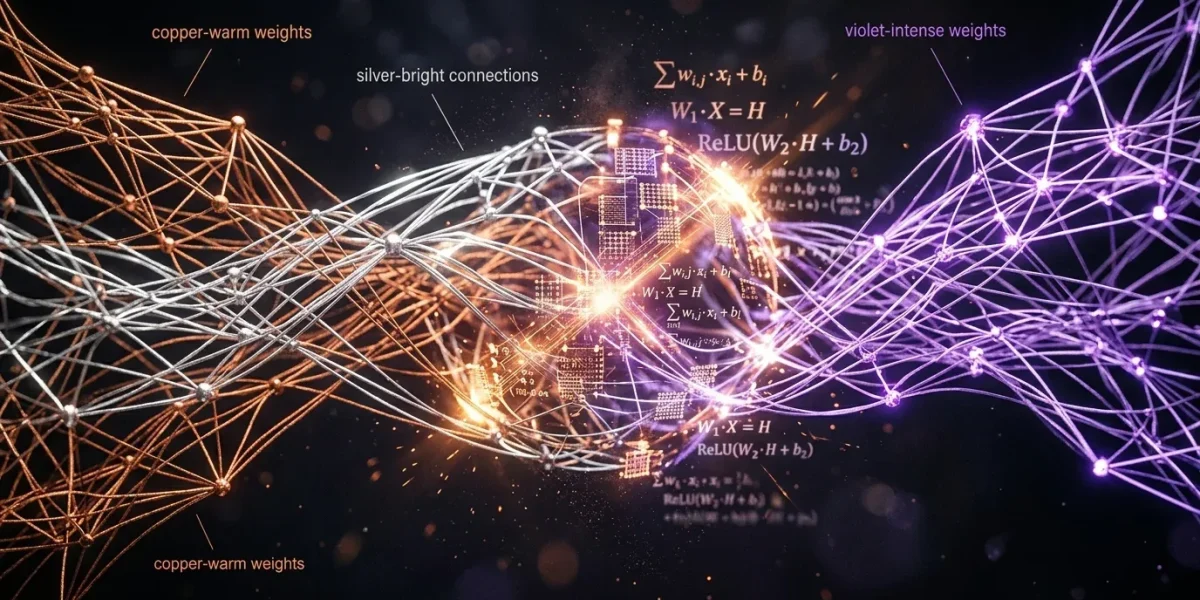
At its core, model merging is about combining the weight matrices of two or more neural networks. When a neural network learns, it stores its knowledge as billions of numerical values called weights. If you have two different fine-tuned versions of the same base model, they share the same basic architecture but have slightly different weight values.
You might think the easiest solution is to take the average of these weights. If weight A in the first model is 0.4 and the corresponding weight in the second model is 0.6, you could simply set the merged weight to 0.5. This is called linear interpolation.
But simple averaging rarely works well for complex neural networks. In high-dimensional spaces, neural network weights do not travel along straight, simple paths. Linear averaging pulls the weights toward the center of the coordinate system, which degrades model performance and causes the AI to output gibberish. This is where advanced model merging algorithms enter the picture, keeping the model’s intelligence intact by navigating the geometry of the parameter space.
5 Easy Ways to Build Your Own AI Using Model Merging
Developers use several distinct mathematical approaches to combine neural networks. Each method has its own strengths, depending on whether you want to combine similar models or stack entirely different architectures together.
1. Linear Interpolation
This is the simplest form of merging. It uses a weighted average to blend two models. You assign a coefficient, like 0.7 to the first model and 0.3 to the second, and compute the mathematical average for every single parameter. While it serves as the foundation for modern research, it often causes severe performance loss when the models have drifted too far apart during their individual training runs.
2. Spherical Linear Interpolation (SLERP)
SLERP solves the limitations of linear averaging by interpolating weights along a spherical path. Instead of drawing a straight line through the high-dimensional parameter space, SLERP treats the weight matrices as vectors on a hypersphere. This preserves the geometric scale and rotational properties of the original spaces, keeping the internal representations healthy. It is highly effective for blending two models that have a shared ancestry, such as two different fine-tunes of Llama 3.
3. TIES-Merging
TIES-Merging addresses the issue of parameter interference. When multiple models are fine-tuned, many weights change in opposite directions, or the changes are so tiny they only add background noise. TIES works through a three-step process. First, it trims away the smallest, least significant weight changes. Second, it elects the dominant direction of change (positive or negative) for each parameter. Finally, it merges only the weights that agree on the direction, preventing conflicting values from wiping out the model’s capabilities. TIES is a massive step forward for complex tasks involving three or more source models.
4. Drop and Rescale (DARE)
DARE takes the pruning concepts of TIES even further. It randomly drops up to 90 percent of the fine-tuned weight changes, resetting those parameters back to their original base model values. It then rescales the remaining weights to keep the overall output consistent. This radical pruning works because most fine-tuning adjustments are highly redundant, allowing DARE to merge multiple specialized models into a single, versatile system without saturating the parameter space.
5. Passthrough (Frankenmerging)
This form of model merging does not blend weights; it stacks layers. You take the first 20 layers of one model and concatenate them with the last 12 layers of another model. This allows you to create models with unusual parameter sizes, such as a 10-billion parameter model built from two different 7-billion parameter models. It is a crude but surprisingly effective way to combine models with entirely different specializations, though it requires careful testing to ensure the transition between layers remains smooth.
My First Merged Model: A Real-World Test
When I first experimented with model merging on a single RTX 4090 GPU, I was highly skeptical. I chose to merge a Mistral-7B model optimized for creative writing with another Mistral-7B model trained specifically for mathematics. Using Charles Goddard’s open-source MergeKit tool, I configured a SLERP merge with a simple YAML file.
The entire process took exactly 4 minutes and 12 seconds to run. It required zero video memory for training because the script simply reads the tensors, applies the spherical math, and writes the new weights directly to the system storage. When I loaded the resulting hybrid model, it successfully wrote a structured Shakespearean sonnet about quadratic equations without hallucinating the algebra. It was an eye-opening moment that proved you do not need a massive budget to build highly specialized, custom software.
| Merge Method | Hardware Requirement | Best Used For | Risk of Performance Loss |
|---|---|---|---|
| Linear | Low (CPU/RAM) | Highly similar models | High |
| SLERP | Low (CPU/RAM) | Two models with shared base | Low |
| TIES-Merging | Medium (RAM intensive) | Combining 3+ specialized models | Very Low |
| DARE | Medium (RAM intensive) | Deeply fine-tuned model blends | Low |
| Passthrough | Low (Disk space) | Creating custom parameter sizes | Medium |
The Real Limitations of Merging Models
Despite its incredible utility, this approach is not a flawless solution. The biggest issue is weight interference, which happens when the underlying mathematical structures of the source models clash. When you merge two models trained on different datasets, their internal pathways can conflict. A weight that represents a comma in one model might represent a bracket in another, leading to bizarre formatting bugs or sudden performance regression. This means you will often need to spend hours tweaking your merge configurations and running evaluations to find a combination that works.
Because the process only reorganizes existing knowledge, it cannot teach a model new facts. If neither of your source models knows how to program in a brand-new coding language, merging them will not magically grant that capability. For entirely new domains, traditional fine-tuning remains necessary.
Frequently Asked Questions
Is model merging better than fine-tuning?
Neither is universally superior. Fine-tuning is necessary when you need to teach a model brand-new data or specific formatting styles, while merging is best for combining existing capabilities without paying for GPU training time.
Can I perform model merging on a standard consumer laptop?
Yes, you can easily merge models on a standard laptop because the process only requires system RAM and storage space, not expensive graphics cards. A basic 8B model merge typically runs in under ten minutes on a standard modern computer.
Can you merge models with different base architectures?
No, you generally cannot blend the weights of entirely different architectures, such as merging a Llama model with a Mistral model. You can only use the passthrough method to stack their layers, but this often results in unstable performance unless the transition is carefully managed.