For more on this topic, you might also want to check out How to Use Data-Centric AI for Better LLM Performance and How to Master Self-Play Fine-Tuning to Supercharge LLMs and The Ultimate Guide to Retrieval-Aware Fine-Tuning for LLMs.
Unlocking Next-Gen AI Image Creation with Retrieval-Enhanced Diffusion
The world of AI image generation is moving at a breakneck pace, isn’t it? Just when you think you’ve seen it all with Diffusion models pumping out incredible visuals from text prompts, a new technique comes along and totally changes the game. We’re talking about Retrieval-Enhanced Diffusion, and trust me, this isn’t just another incremental upgrade. This approach integrates the best of information retrieval with the creative power of diffusion models, leading to images that are not only stunning but also remarkably faithful to specific, often complex, input concepts.
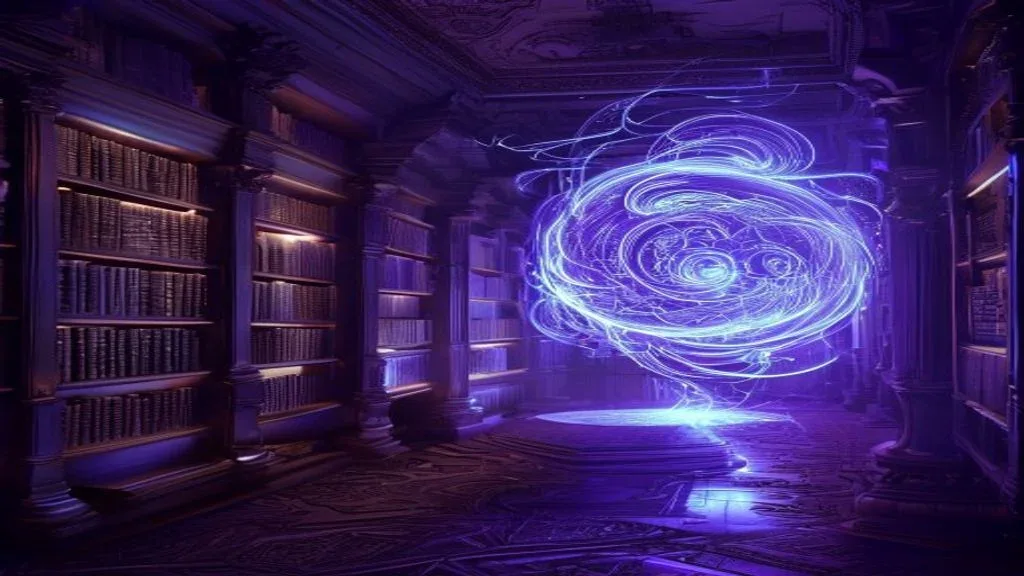
Think about it: traditional diffusion models, while brilliant, sometimes struggle with very niche or abstract requests. You might ask for “a Byzantine mosaic of a futuristic cyborg,” and while it will give you something cool, the “Byzantine” or “cyborg” elements might be a bit generic, not truly reflecting the intricate details you had in mind. That’s where retrieval comes in. Instead of just guessing based on its training data, a Retrieval-Enhanced Diffusion model can actually *look up* relevant visual information, similar to how a human artist might reference historical art or specific character designs. It’s like giving the AI a vast digital library to consult before it even starts sketching. This makes the generated images far more accurate and nuanced, pulling from a richer, more specific context.
How Retrieval Supercharges Diffusion Models
At its core, Retrieval-Enhanced Diffusion works by adding an extra layer of “knowledge” to the image generation process. Regular diffusion models learn to generate images by progressively denoising a random noise signal, guided by a text prompt. They essentially learn the statistical distribution of images from their training dataset. But this learning is implicit. When you introduce retrieval, you’re making that knowledge explicit and accessible during generation.
Here’s a simplified breakdown:
- The Query: You start with your text prompt, just like always. This prompt becomes the “query” for the retrieval system.
- Information Retrieval: Instead of immediately going to the diffusion process, the system first scours a vast database of existing images and their associated captions or tags. It looks for images that are semantically similar to your prompt. This database can be enormous, containing millions or even billions of images.
- Contextual Embeddings: The retrieved images, or rather their learned representations (embeddings), are then fed into the diffusion model alongside your original text prompt. These embeddings act as additional “guidance” or “conditioning.”
- Enhanced Generation: With this extra visual context, the diffusion model has a much clearer idea of what you’re trying to achieve. It can draw upon the specific styles, compositions, or elements found in the retrieved examples, leading to a much more accurate and high-fidelity output. It’s not copying, but rather understanding and integrating.
This technique is particularly powerful for generating images of specific people, objects, or artistic styles that might be underrepresented or ambiguously represented in the diffusion model’s initial training data. Imagine trying to generate an image of a very specific type of architecture from a niche historical period; retrieval can provide direct visual cues.
Applications and Future Potential of Retrieval-Enhanced Diffusion
The implications of Retrieval-Enhanced Diffusion are pretty vast, touching everything from creative industries to scientific visualization. For artists and designers, it means more precise control over the output, allowing for rapid prototyping of complex visual concepts. If you’re designing a new product and need to visualize it in a specific material or lighting condition, providing reference images through retrieval can guide the AI far more effectively than just text alone.
Think about fashion design: you could input a prompt for a “dress inspired by 18th-century French court fashion with futuristic metallic accents,” and then provide a few reference images of specific historical garments and modern metallic textures. The Retrieval-Enhanced Diffusion model could then combine these elements with remarkable accuracy and creativity.
In fields like scientific research, visualizing complex data or theoretical models could become much easier. Imagine needing to generate an image of a specific protein structure or a rare astronomical phenomenon. By retrieving similar images or diagrams, the AI can produce more scientifically accurate and detailed visualizations, aiding in understanding and communication. This can even extend to creating training data for other AI models. If you need a dataset of very specific visual examples, Retrieval-Enhanced Diffusion can generate them, reducing the manual effort of data collection.
Another interesting application lies in creating personalized content. Imagine an AI assistant that learns your visual preferences over time. When you ask it to generate an image, it could retrieve images from your personal collection or past preferences, then use those as a basis for new creations. This could lead to truly unique and individually tailored visual experiences. The possibilities really are endless once you can guide these powerful generative models with specific, relevant visual context.
The Technical Underpinnings: Embeddings and Similarity Search
To make Retrieval-Enhanced Diffusion work, there’s a lot going on under the hood, especially concerning how “retrieval” actually functions. The core idea relies on sophisticated embedding techniques and efficient similarity search. Every image and every piece of text, including your prompt, gets converted into a high-dimensional vector, an “embedding.” These embeddings are numerical representations where similar items are located closer together in this abstract vector space.
For retrieval, when you input your text prompt, it’s first converted into an embedding. Then, this embedding is used to search a vast index of pre-computed image embeddings. This search isn’t just a simple keyword match; it’s a semantic search. The system looks for images whose embeddings are closest to the prompt’s embedding in that high-dimensional space. Modern databases are incredibly optimized for this, using techniques like Approximate Nearest Neighbor (ANN) search to quickly find the most relevant items even in datasets containing billions of entries. This is similar to how a powerful search engine might use a semantic search to find relevant web pages. A good Text Diff Checker, for instance, operates on comparing actual text, but for image retrieval, it’s all about these abstract numerical representations.
Once the most relevant image embeddings are found, they are then fused with the text prompt’s embedding. This combined, richer embedding then guides the denoising process within the diffusion model. It gives the model not just “what to draw,” but also “how it should look” based on real examples. This fusion is critical, as it allows the diffusion model to integrate the style, composition, and specific details from the retrieved images without simply copying them pixel for pixel. It learns from them, synthesizing new imagery that incorporates the desired characteristics. This whole process makes Retrieval-Enhanced Diffusion a powerful step forward in controllable and high-fidelity AI image generation.
Frequently Asked Questions
What is the main benefit of Retrieval-Enhanced Diffusion?
The main benefit is significantly improved accuracy and control over generated images. By allowing the AI to “look up” relevant visual examples, it can create images that are far more faithful to complex or niche concepts than standard diffusion models alone.
How is Retrieval-Enhanced Diffusion different from just using a text prompt?
While a text prompt guides standard diffusion, Retrieval-Enhanced Diffusion adds an extra layer of explicit visual conditioning. It uses your prompt to find actual reference images, and then incorporates the visual information from those references directly into the generation process.
Can Retrieval-Enhanced Diffusion generate entirely new images, or does it just remix existing ones?
It generates entirely new images. The retrieved images serve as inspiration and guidance, providing contextual information, but the diffusion model still performs its creative denoising process to synthesize novel visuals, not just copy or collage existing pixels.